Electromagnetic Disc Grinding Machine for Brake Pad Production: How to Improve Grinding Accuracy and Production Efficiency
In brake pad manufacturing, grinding is not simply a finishing step. The grinding process directly affects the thickness consistency, surface condition, and dimensional accuracy of the finished friction material. When production moves from small-batch processing to continuous manufacturing, even a small variation in grinding thickness can create quality problems across a large number of brake pads.
This is why choosing the right brake pad grinding machine becomes an important part of friction material production line planning.
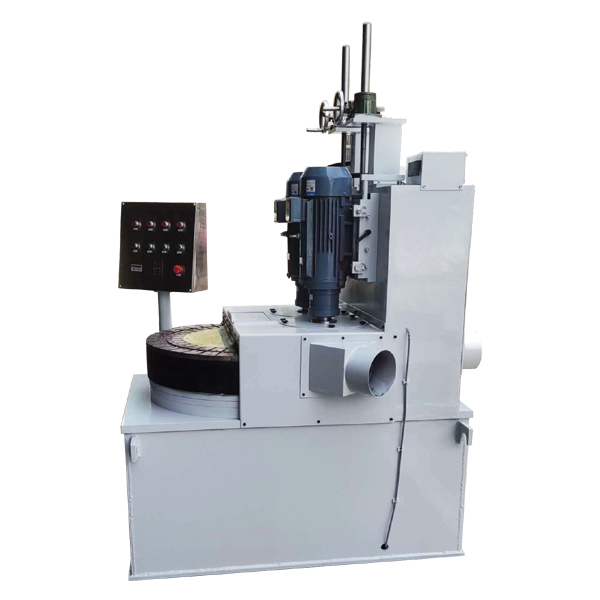
For manufacturers processing brake pads and other friction materials, an electromagnetic disc grinding machine provides a practical solution for continuous grinding, dimensional adjustment, and stable material handling. Longhui Machinery's Electromagnetic Disc Grinding Machine is designed around these production requirements, with a grinding accuracy of up to ±0.05 mm, continuous up-and-down operation, and a heavy-duty structure weighing approximately 2,000 kg.
Why Grinding Accuracy Matters in Brake Pad Manufacturing
Brake pads need to maintain consistent dimensions across production batches. If the grinding process removes too much or too little material, the final thickness may fall outside the required tolerance.
In actual production, grinding accuracy can affect several subsequent operations:
- Finished brake pad thickness consistency
- Contact between the friction material and mating components
- Assembly dimensional stability
- Batch-to-batch product consistency
- Material waste caused by excessive grinding
- Rework and inspection requirements
For this reason, a grinding machine should not be evaluated only by how quickly it removes material. The more important question is whether it can maintain repeatable grinding results during continuous production.
A machine with a stated grinding accuracy of ±0.05 mm gives manufacturers a clear reference point when evaluating dimensional control. However, actual production performance also depends on the workpiece material, grinding conditions, machine adjustment, tooling condition, and production environment.
What Makes Brake Pad Grinding Difficult?
Friction materials are not necessarily uniform like conventional metal workpieces. Depending on the formulation, brake pad materials may contain fibers, fillers, resins, abrasives, and other components with different physical properties.
During grinding, manufacturers therefore need to deal with several practical issues.
1. Maintaining consistent thickness
The machine needs to remove material evenly without creating excessive variation between different workpieces.
2. Controlling production continuity
If operators need to frequently stop the machine for feeding, unloading, or adjustment, the grinding process can become a bottleneck in the production line.
3. Handling different brake pad specifications
Brake pad manufacturers may produce multiple sizes or product specifications. Frequent product changes make adjustment time an important factor in overall production efficiency.
4. Managing grinding dust
Grinding friction materials generates dust. Equipment design therefore needs to consider sealing and dust extraction arrangements rather than treating dust collection as an afterthought.
5. Maintaining stability during long operating periods
Grinding generates mechanical loads and vibration. A machine with insufficient structural stability may experience changes in processing performance during extended operation.
These problems are closely connected. Increasing grinding speed without maintaining dimensional control does not necessarily increase useful production output. The goal is to achieve a balance between accuracy, continuity, adjustment, and machine stability.
How an Electromagnetic Disc Grinding Machine Fits into the Production Process
An electromagnetic disc grinding machine is generally used to remove excess material and achieve the required dimensions or surface condition of friction material components.
In a production environment, the basic workflow can be understood as:
Workpiece feeding → positioning → grinding → material removal → inspection → subsequent processing or assembly
The machine becomes particularly valuable when manufacturers need repeated processing of large quantities of similar workpieces.
Instead of treating each workpiece as an isolated operation, continuous up-and-down movement allows the grinding process to operate as part of a more continuous production flow.
For factories producing brake pads in batches, this can reduce unnecessary interruptions between individual grinding operations.
Continuous Up-and-Down Operation
One of the practical features of Longhui Machinery's machine is continuous up-and-down operation.
For high-volume production, the difference between intermittent and continuous processing can become significant. Every manual interruption adds handling time, and repeated handling can also introduce inconsistencies in positioning.
Continuous operation allows feeding and blanking to become part of the equipment's operating cycle.
The benefit is not simply a higher machine speed. It is the reduction of unnecessary pauses in the grinding process.
For a production manager, this means the machine can be evaluated according to a more useful question:
How many qualified workpieces can the grinding process consistently produce within a given production period?
That figure is more meaningful than looking at grinding speed alone.
±0.05 mm Grinding Accuracy: What Does It Mean for Production?
Longhui Machinery specifies a core grinding accuracy of ±0.05 mm for this electromagnetic disc grinding machine.
For brake pad manufacturers, this tolerance provides a useful benchmark when evaluating equipment for dimensional-control applications.
However, machine accuracy should always be considered together with actual production conditions. The final result can be influenced by:
- Friction material formulation
- Workpiece dimensions
- Grinding disc condition
- Machine adjustment
- Feeding and positioning consistency
- Operating environment
- Maintenance condition
Therefore, when purchasing a grinding machine, buyers should ask suppliers not only for a nominal accuracy figure but also for information about how that accuracy is achieved and maintained during continuous production.
For example, a technical discussion with the equipment supplier can cover sample workpieces, target dimensions, required tolerance, grinding volume, and expected operating conditions.
This gives the manufacturer a much more realistic basis for equipment selection.
Grinding Disc Size and Machine Configuration
The grinding disc is one of the main components determining the working area and processing configuration of the machine.
Longhui Machinery's Electromagnetic Disc Grinding Machine uses a Ø600 mm grinding disc, with the specified maximum workpiece size of 20 mm × 140 mm.
For buyers, these figures should not be considered independently.
Before purchasing equipment, manufacturers should compare the machine's working range with their actual product drawings. If a factory produces several brake pad specifications, it is better to evaluate the largest and smallest workpieces rather than selecting the machine based on only one commonly produced model.
This can help avoid two common purchasing problems:
Choosing a machine that is too small: The equipment may process the current product but require modification or replacement when the product range expands.
Choosing equipment without considering the actual workpiece: A machine may have a large grinding disc but still require additional fixtures or adjustments for specific friction material shapes.
A proper equipment evaluation should therefore start from the workpiece, not simply from the machine model.
Why Machine Weight Matters in Grinding Applications
The Electromagnetic Disc Grinding Machine has an overall weight of approximately 2,000 kg.
Machine weight alone does not determine machining accuracy, but in grinding applications, structural rigidity and stability are important considerations.
Grinding involves continuous contact between the workpiece and grinding disc. Mechanical vibration or movement of the equipment can affect processing stability, particularly when the machine operates for extended periods.
A heavier machine structure can contribute to stable operation when combined with an appropriate frame design, transmission system, and installation foundation.
For this reason, buyers should consider machine weight together with:
- Machine frame construction
- Installation requirements
- Vibration control
- Motor and transmission configuration
- Grinding disc support
- Long-term operating conditions
Rather than simply asking "How heavy is the machine?", a more useful engineering question is:
Can the machine maintain stable grinding conditions throughout the planned production cycle?
Easy Adjustment Is Important When Producing Multiple Brake Pad Models
Brake pad manufacturers rarely produce only one specification forever.
Product dimensions, formulations, and customer requirements may change. If every product change requires complicated mechanical adjustments, setup time can gradually become a significant source of production loss.
Longhui Machinery's machine is designed for relatively simple adjustment so operators can change the grinding setup according to different brake pad requirements.
This is particularly useful for manufacturers handling:
- Multiple brake pad sizes
- Small and medium production batches
- Frequent product changes
- Custom friction material products
- Different customer specifications
For production engineers, adjustment time should be included when calculating equipment efficiency.
A machine that runs quickly but requires long setup periods may not deliver better overall productivity than equipment with slightly different processing parameters but faster changeover.
Dust Extraction Should Be Considered at the Equipment Design Stage
Grinding friction materials produces dust, and dust control is an important consideration in brake pad manufacturing.
Longhui Machinery's equipment includes sealing-cover ventilation connections, with two Ø110 mm vents and one Ø160 mm vent for connection to a dust extraction system.
The purpose is to provide designated extraction points around the grinding area rather than allowing dust to disperse freely into the workshop.
However, the actual dust-control performance also depends on the factory's extraction system, duct layout, airflow capacity, and maintenance.
For this reason, manufacturers purchasing grinding equipment should evaluate the machine and dust collection system together.
Before installation, it is worth confirming:
- Dust extraction interface dimensions
- Required airflow
- Ducting arrangement
- Dust collector capacity
- Workshop ventilation
- Cleaning and maintenance requirements
This is especially important for factories planning continuous production, where dust generation accumulates over long operating periods.
How to Choose a Grinding Machine for Brake Pad Production
There is no single machine configuration that is suitable for every friction material manufacturer.
Before purchasing a brake pad grinding machine, buyers should evaluate at least five areas.
1. Product Dimensions
Provide the supplier with actual brake pad drawings, including length, width, thickness, and dimensional tolerances.
This allows the supplier to confirm whether the machine's working range is appropriate.
2. Required Grinding Tolerance
Do not evaluate equipment only by grinding speed.
Confirm the required finished dimensions and tolerance, then discuss whether the machine can achieve the required result under actual production conditions.
3. Production Volume
A machine for laboratory or small-batch processing has different requirements from equipment intended for continuous factory production.
Production volume should influence the selection of feeding method, operating cycle, and automation level.
4. Product Changeover Frequency
If several brake pad models are manufactured on the same production line, adjustment convenience becomes an important factor.
Ask the supplier how the machine is adjusted and how long typical changeovers take.
5. Dust Extraction Arrangement
Confirm the machine's ventilation interfaces before installation. This allows the factory to design the dust collection system around the equipment rather than modifying the workshop afterward.
What Should Buyers Ask a Grinding Machine Manufacturer?
A supplier's product page may provide basic specifications, but industrial equipment purchasing requires more detailed technical communication.
Before placing an order, buyers can ask the manufacturer:
What grinding tolerance can be achieved on our actual friction material?
Send sample workpieces or drawings and request a test or technical evaluation where possible.
What is the recommended grinding disc configuration?
The appropriate disc and grinding conditions depend on the workpiece material and required processing result.
How is the machine adjusted for different brake pad sizes?
This is particularly important for factories producing multiple models.
What dust extraction system is required?
Confirm connection sizes and recommended airflow before factory installation.
What are the installation requirements?
A machine weighing approximately 2,000 kg requires appropriate consideration of floor loading, positioning, and installation conditions.
What maintenance parts need regular replacement?
Understanding consumable and wear components before purchasing can make long-term maintenance planning easier.
Electromagnetic Disc Grinding Machine Specifications
| Parameter | Specification |
|---|---|
| Application | Brake pad and friction material grinding |
| Machine size | 1500 × 1300 × 1700 mm |
| Machine weight | Approx. 2000 kg |
| Grinding disc | Ø600 mm |
| Maximum specified workpiece size | 20 × 140 mm |
| Grinding accuracy | ±0.05 mm |
| Ventilation connections | 2 × Ø110 mm + 1 × Ø160 mm |
| Operation | Continuous up-and-down operation |
| Adjustment | Designed for simple adjustment |
| Transportation | Ocean or land |
| Packaging | Container |
| Payment terms | L/C, T/T |
| Incoterm | EXW |
A Practical Approach to Improving Brake Pad Grinding Efficiency
Improving grinding efficiency does not necessarily mean increasing machine speed.
For a brake pad production line, a more sustainable approach is to reduce the time and variation associated with the entire grinding process.
This includes:
Stable machine structure → reduces the influence of vibration and movement.
Consistent grinding accuracy → reduces dimensional variation and unnecessary rework.
Continuous operation → reduces interruptions between workpieces.
Simple adjustment → shortens changeover time between product specifications.
Proper dust extraction → creates a cleaner and more manageable grinding environment.
When these factors work together, the grinding machine becomes more than a standalone piece of equipment. It becomes part of the production system.
Longhui Machinery's Approach to Brake Pad Grinding Equipment
Longhui Machinery develops and manufactures equipment for friction material processing, with the Electromagnetic Disc Grinding Machine designed around the practical requirements of brake pad grinding.
The machine combines a Ø600 mm grinding disc, ±0.05 mm grinding accuracy, continuous up-and-down operation, simple adjustment, and a heavy-duty approximately 2,000 kg structure.
For manufacturers evaluating equipment for brake pad production, the most important step is not simply comparing catalog specifications. The better approach is to provide the supplier with actual product dimensions, material characteristics, required tolerance, and expected production volume.
This allows the machine configuration to be evaluated against the real production process rather than against specifications alone.
If you are planning a new brake pad production line, replacing an existing grinding machine, or increasing grinding capacity, contact Longhui Machinery to discuss the required grinding range, machine configuration, and production requirements based on your actual workpieces.
Related News
Leave me a message
New Products